JOHN D. FRY: ENIGMA OF THE DIVINE

INTERVIEW + NEW WORK

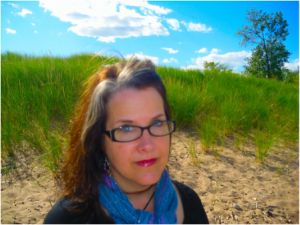
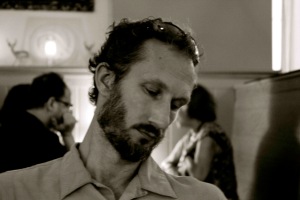
John photoJohn D. Fry is the author of the chapbook silt will swirl (NewBorder Publishing). He serves on the editorial staff of Newfound: An Inquiry of Place and Front Porch and is currently an MFA candidate at Texas State University-San Marcos. His work has appeared or is forthcoming in Pebble Lake ReviewKonundrum Engine Literary ReviewThe Dirty NapkinBorderSensesThe Texas Review, and Blood Orange Review. He lives in the Texas Hill Country.

TSE: John, since I don’t know you at all, would you tell us a story about how you came to poetry? Also, what do you find your poetry haunted by, or what spectral presences make themselves known to you in your poems?

JF: Thank you so much, Sun Yung, for giving me the opportunity to speak about my work. & you’re right: we don’t know each other with respect to physical proximity, have never spoken “in person,” as it were — but if it is possible for language to create connections across space & time, as I believe it can & does, then this is (hopefully) the beginning of becoming acquainted.

“How did you come to poetry?” is one of those perennial questions that I think gives way to answers that are often apocryphal or, at least, somewhat self-mythologizing (though I don’t mean mythologizing in a pejorative way). Mine is no different, & I guess the story could be told in two different, but related, ways. Like many, I began to write poetry with intent & seriousness as an angst-ridden adolescent around the age of fifteen. Why poetry instead of prose — which I’ve only attempted in highly self-conscious fits & starts over the years — I couldn’t say, though I have a few theories. I think I turned to the (blank) page — as opposed to other pursuits, some more savory than others — because there were things at work in my life then that I didn’t understand. &, well, felt a burning need to try to understand. Paradoxes, contradictions, mysteries: the enigma of self & world(s). The identity crises to which nearly all young adults (& I’m not that far from still being a young adult!) are prone.

A simpler, & perhaps deeper, way of telling the story of how I came to poetry, which begins to dovetail into your other questions, would go something like this: I am the gay son of an evangelical United Methodist minister. Having been raised in a devoutly religious household/community, & having spoken at length with other people who were similarly raised in an environment where religious observance was of paramount importance — irrespective of the faith practiced — I’ve become convinced that such an experience indelibly impacts the way a person experiences being-in-the-world(s). Sometimes for the better (one would hope!) but, also, sometimes for the worse. It informs the form of a person’s perceptual framework, for lack of a better phrase — in a way that she or he might or might not recognize — & becomes an indigenous part of her or his psychic pathways.

I would even go so far as to say that being steeped in a particular religious tradition from early childhood gives you an additional mothertongue made up of that tradition’s mythology, symbology, liturgy — that is, its poetry — iconography, etc. And even if you cease being observant, stop going to church, embrace heretical or blasphemous ideas, or say to hell with all of this & walk as far outside of orthodoxy as you can possibly go — that language, which in a very real way is your native language, is as inextricably a part of you as the bones beneath your skin.  As your skin itself. I’m not sure that such a fluency ever completely disappears.

The presence of this other mothertongue — & the sense of belonging among a particular community, of having a people: they (Christians) were unquestionably my people & I (a Christian) unquestionably belonged among them — is incredibly powerful & can be an abiding, empowering gift. The loss of either is painful beyond words, & it so happened that both of them were called into radical question/cast in doubt when I was a teenager becoming more & more aware that, contrary to all of the ways I was raised, I wasn’t attracted to girls but to other guys.

For me, then, perhaps because the words of the Bible were poured into me from infancy onward — which I’ve described before in poems as having verses tattooed onto my inner eyelids — particularly (but not only) the New Testament, it is literally & figuratively true for me to say that in my beginning was The Word. Maybe because the mystery of the Incarnation is described as the divine word being made flesh, I cannotnot believe that language also partakes of flesh. Is an incarnate, corporeal thing that calls the world(s) into being. And while I have wandered quite far afield of the orthodoxy of my childhood and, later, adolescence, I have retained a faith in words even if I no longer believe in The Word.

Frank Bidart, in his long poem “Ulanova at Forty-Six At Last Dances Before A Camera Giselle,” writes about something that he calls a “radical given.” In the poem, Bidart is talking about the radical given in relation to tragedy (Renaissance, Greek) as a genre: he gives the examples of Hamlet and Oedipus. What’s compelling to me about the idea of a “radical given” isn’t the inevitably tragic way it’s cast in Bidart’s poem: what interests me is the degree to which that given, whatever it happens to be, is inescapable. Which, I suppose, depending upon one’s view of free will, etc, could be viewed as being prone to a tragic frame of mind. Notwithstanding that, I would still say that each of us has at least one thing that could be called a radical given. Being a preacher’s son & a queer one at that are, I’d say, examples of radical givens in my life.

~

When I write, then, it’s in a way inevitable that some glimpse of the panorama of the Judeo-Christian tradition — the Bible, theology, liturgy, etc — can & sometimes will announce its presence within the plane(s) of a given poem. (It’s one of those things where though I have in many ways wandered far, far away from the church — gotten out and/or been cast out — I haven’t been able to get the church out of me, as it were.)  A fact that is sometimes salutary &, other times, a kind of further insult to injury. & because my relationship with the Christian tradition is vexed at best, I would definitely say that it often haunts my poems. The extent of the haunting remains at the periphery of some poems, but in others the specters stand front & center.

I would say, too, that my poems are haunted by language itself — haunted, that is, because the battleground of the crisis of faith I experienced as an adolescent young adult (early twenties) began & ended with the Alpha & Omega: language. & my sense of language’s ability to signify — to mean at all — frayed & fragmented. This is one of the reasons, I think, for the spareness present in the poems I’ve been writing over the past several years, as well as why syntax becomes a quicksilver thing. The manuscript that I’ve been working on over the past year (my MFA thesis, which I hope might become my first full-length collection) chronicles what I only know to call a pilgrimage.

TSE: Ah, the PK–a special tribe of people! What an anthology that would be! I’m always intrigued by people who started writing poetry at a young age–which does seem to be most poets–because I didn’t start until I was in my twenties, and was shamelessly hostile toward poetry before then.

I like the idea of “radical given”–I’ve been teaching Hamlet for the past two years and I’ve come to the conclusion, which may change, that one of Hamlet’s radical givens is that he, as written, is having a profound crisis of masculinity. He cannot become a man until he becomes the king, but since becoming the king means becoming a murderer, he is doomed to be stained, stained in a court (world) that is already corrupt. It’s interesting to study it with teenagers, who all think that he’s about 15 or 16, and are shocked when I point out that the text implies indirectly that he’s 33 (?) in the graveyard scene. He’s well past the age when he should have “become a man”. Anyway, I’m digressing, but Oedipus is of course also, literally, cursed. So what is a man to do, a man who is must become the king, but that throne is tainted? Is that basically the Christian story in a nutshell–original sin, etc. etc.? And it must be said that those two narratives leave little in the way of satisfying journeys for the female characters, although if we look at the characters as archetypes we can see that each of us has a desperate prince and a man-of-action king within us…perhaps one could see Hamlet and Oedipus as quasi-queer characters because they are made as thus and thus but the mold that is before them cannot accommodate them (Hamlet the thinker must become a man of action, Oedipus the man of action pursues the murderer back to himself…)…

What are you reading these days and what are your reading practices like?

JF: I love the reach of your question – what is a man who must become king to do when his throne is tainted? – & your observation that characters like Hamlet & Oedipus represent mythic(cally tragic) examples of people who are, as you say, “made as thus,” yet unable/incapable of fitting the mold that’s been fated them. (Another analogue to this is Bidart’s “The Second Hour of the Night” in Desire, where he takes the myth of Cinyras & Myrrha out of Ovid & spins one of the most haunting, devastating statements about desire that I’ve ever encountered.) If becoming king is one way of describing the process of becoming who you are – which begins in how you’ve been “made as thus” – & if the taint of the throne is that feeling not of being lost so much as not belonging, of not fitting in, I think every person on earth has felt that way at one time or another. Has felt like a stranger to one’s self. Perhaps it could be called the existential crisis I’d say almost everyone eventually experiences or undergoes once they awaken to things as they are. Dante illustrates this moment as finding oneself in the middle of a dark wood, & the ensuing journey takes him through Purgatory & Hell until, at last, he glimpses Paradise. The idea of going into the Underworld from Inanna’s descent to the various Greco-Roman figures who entered & then exited those gates – & the alchemical crucible of that – is very powerful to me. Christianity teaches that Christ also went there & came back.

Truthfully, I don’t think that the cipher the Christian story whirls around ultimately is the idea of original sin. Though this certainly isn’t always the case with Christianity in practice, I would say that God’s overwhelming love for Creation This may merely be nostalgia on my part, or the fact that I’ve recently spent a great deal of time with the Revelations of Divine Love by the medieval English mystic Julian of Norwich, whose visions of Christ as Mother present a radically different view of the relationship between God & World than is more common nowadays in Christianity. One focused not on the eschatological fire of the Last Judgment or the lurid spectacle of human sinfulness – in fact, Julian doesn’t seem to believe in original sin at all! – but, rather, on the wonders of Christ’s love.

For around ten years, I didn’t so much as crack open the Bible to read it or study it the way I did as a child & teenager – save for scholarly purposes when writing on poets like Chaucer, Milton, Donne or Herbert – because I was too angry with Christianity in general & wanted to get as far away from it as possible. It was too hot to touch. Being a queer kid raised in the church – I can only speak to my experience, though I imagine mine wasn’t anomalous – was a schizoid experience. On the one hand, you grow up believing God not only loves who you are: God has always loved you. For who you are. &, as Psalm 139 says, God hasalways known who you are – before you ever were. And yet, simultaneously, you’re subjected to all manner of sociocultural prohibitions, or taboos, about cleanliness & uncleanliness that I now believe to be anachronistic and/or irrelevant to the teachings of Jesus that can take a lifetime to counteract and/or unlearn. A case in point: the story of Sodom & Gomorrah. I cannot remember not knowing this cautionary tale, but it wasn’t until I was an adolescent that I learned the supposed real reason why God smote that city unto ash. Or the juridical prohibitions from Leviticus or Paul’s Epistle to the Romans that evangelical Christians fling about like bludgeons at the bugaboo of homosexuality. As a teenager, trying to untie such a Gordian knot is enough to leave a person unhinged. &, for a good while, I certifiably was. & I’ve known people who didn’t survive the undertaking.

When you belong to a religious tradition that holds contradicting notions about something like sexuality, the cognitive leap from a recognition of same-sex attraction to an increasing feeling that there’s something unspeakably awful & evil inside of you happens before you’ve even realized it. & not only is there something anathema somewhere within you: you become anathema, too. Within some sects of Christianity, homosexuality is believed to be symptomatic of demonic possession. As are things like clinical depression, or other forms of mental illness. Laying-on-of-hands prayer & exorcisms are routinely used to cast out such devils. I feel it’s important to point out that the United Methodism of my childhood was nothing at all like this – & I was never subjected to any of the above – but I did grow up with an increasing sense that there was something within me, a thing I neither asked for nor actively sought that just was, that as a child I could only understand as wrongness. Badness. “Made as thus.”

Notwithstanding all of the ways the Bible has been oh-so-effectively used as a weapon to disenfranchise, marginalize, & silence anyone designated as “other,” I think that it’s a beautiful thing that, despite all of the ways various factions within the Christian have tried to make the Bible mean in a monologic, which is to say hegemonic, way – the Bible invariably ends up speaking out of both sides of its mouth. It speaks in tongues. By that, I mean that it doesn’t speak in or with one unified voice. Claims or pronouncements made in one book contradict those made in others (which brings to mind, for me anyway, Whitman’s willingness to contradict himself). Of course, this is particularly true with respect to the Old & New Testaments – one of the many things too often forgotten by Christian fundamentalism, I think – but it’s there between the books of the New Testament, too. When I began to read the Bible again a few years ago, I was spurred by writers like Avivah Gottlieb Zornberg (her book The Beginning of Desire, about Genesis, is unbelievable) and Alicia Ostriker (her book The Nakedness of the Fathers: Biblical Visions and Revisions) who are contemporary practitioners of midrash. That is when I seriously began to invite & invoke scripture into my poems.

~

As a reader, I’m omnivorous, obsessive, & active. I read with a pen in hand or near my person. & rather associative in the way one text will lead to another text which leads to another text which leads to another text. I am often reading multiple books at any given time, & my backpack usually runneth over with whatever is occupying my mind on a given day or period of days. (The book(s) that I carry around can change within the span of a day, too, which leads to piles of books all over my apartment, something that drives my partner beyond distraction.) An observer looking at my bookshelves will find subjects like mythology & folklore, anthropology & archaeology, astronomy & astrology & alchemy, religion & philosophy, literary theory & linguistics, sexuality & cultural studies, but the vast majority of the books are volumes of poetry & fiction (more poetry than fiction). My tastes, I’d say, are eclectic, ecumenical, trans-historical, cross-cultural. Anne Carson will send me back to Sappho just as Frank Bidart will lead me back into Ovid’s Metamorphoses; Thomas Merton has been known to share space on my desk at the same time as Foucault & Monique Wittig. It’s all over the place almost all of the time.

I also return to certain authors & particular books over & over the way some migrating species return to the same place year after year. These, I guess, could be called touchstones. Or talismans. Or both. Virginia Woolf, especially her diaries, is one writer I go back to often. Carole Maso’s AVA is another. Emily Dickinson’s poems & letters – one could spend a lifetime in them & still never touch the bottom of that blue!Fugitive Pieces by Anne Michaels is a novel I read every year as if doing so were a religious observance (which, in a way, I’d say it is). Gloria Anzaldúa’s Borderlands/La Frontera, because she writes about the borderland area of South Texas, especially the Valley, where she & Iboth grew up (I lived closer to the coast, near Corpus Christi); when I first read it in high school, it was the first time I’d encountered a book that explained the complex spirit of the place where I came of age as a queer person.

Most recently, I’ve been dipping in & out of the collected interviews of Robert Duncan’s recently released by North Atlantic Books called A Poet’s Mind, which I’m sure will lead me back to his poems. The interviews are as wild & dizzying as the little bit of his The H.D. Book that I’ve read &, now that I’m finished with my MFA, will be able to begin again in earnest. The work of Jean Valentine & Fanny Howe are never very far away from me & essential to my writing life. I just finished the new chapbook of Valentine’s poems, [A ship], released by Red Glass Books — which is marvelous! & the newest things I’ve been working on (post-MFA writing, that is) are what I think might become a sequence, or long poem, that attempts a dialogue with the work of Fanny Howe’s. But they’re so new & messy that I have no idea what to make of them yet.

Paul Celan’s work has also become hugely important to me, & I have been carrying his books around with me for the better part of a year now on/off, both the poems (I have Hamburger’s Selected) as well as the little gem of a book of his prose, which I think contains some of the most profound meditations about language in general & poetics in particular that I’ve ever encountered. I’ve also been reading his letters — specifically, the correspondence between him and Nelly Sachs, & have been working on a series of erasure poems that I call “ghostings” of their letters to each other. What has moved me so much about Celan, I think, is his belief that a poem is en route — its language reaches out toward something, somewhere, someone — & the way that his poems seek what he calls an addressable Thou. Which could be God, or G-d, or god. Or the impossibility of. A friend, a family member. Someone living, someone dead. An individual or a collective. (I think that Valentine achieves something similar, in fact, in her own work, which so frequently, & so intimately, addresses a you.) That reach is palpable in the letters Celan & Sachs wrote each other, too — their words ache with the effort to reach each other — & this is increasingly what I hope might happen in my own poems, which have begun to address a you that is more than merely a self-reflexive way of referring to my ‘I’.

TSE: Thank you, John Fry.

* * *

by the light of no moon


it is time, she said, for you to go
even though you do not know this

star-spare road
seated at the feet of the eldest
wisewoman tree, I tied

(even though I do not
know this star-spare road)

a saffron thread to her oldest branch

for the breath’s
quicksilver who

am I in the quiet bell
between inhale and exile

please don’t let me
forget though I do not know

how to leave ashes behind
star-spare road, remember

ember awake
on the tongue


gathered around the gorsefire


this was long after sky
spun skeins & skeins

of woolen thread dyed indigo, or some other
rare shade of sorrow. after we grew hard

*

of hearing—waterlogged
eye—the stutterer’s

stone for a tongue—

*

I’m sorry, ancient elder
tree, but I couldn’t quite bring the faded maple leaves or us

to believe: wherever I went
I went with me. implacable

edge—

*

& already the derelict carillon
bells ring out wild, rust-colored questions—

of the problem: word was to wound
as hurt was to heart. I confess I wanted to

*

wander the wreckage piled
skyward before the angel

statue, facing the courtyard, one
wing blown away, or finger the

scapular’s prayerworn scraps, the legendary
cathedral that was our youth, an Albion

ruin under which prehistoric
wood in a sacred circle round

was laid. forgotten

*

like a henge of
boyhood abandoned, but tended faithfully by

discalced brothers who lay down among
where altars were, their tonsured heads pillowed

by bluestones.

*

there where the Lady—who has all
but fled this place—was thought to walk,

elderberry blossoming behind her
most immaculate feet.

*

in the noctuary

earlier ages named the Book
of Last Light, the inked uncials shone

only below the evensong of Hesperus
many an ever ago.

*

& as our ancestors once

understood augury, the feather scripture of birds’
wings writing Autumn on the air, we tried

but the scratched marks left
by the beak of a quill—they could not

fly.

*

as if parchment might rival
sky, & we hadn’t tallow enough to trick it into

believing a lantern shaped like a nine-pointed star
was a star. on the day the last lark’s song waned

*

illegible in the sun, we cried out
& beat our breasts. with an ash-handled

knife, split nine birds
for a hook of a wish

*

but their entrails did not sing.
we further hollowed out

their already hollow
bones for the thinnest flute

of a hope we might hear—but their
spirits whistled no clarion call.

*

unable to see, unable to read, sorrow-spelled
our astronomers gave up their grief-

whittled ghosts. we buried them
alongside our ancient wise, adorned with woad

for the long journey

*

underground. whorls of blue
triskelions the only spiral pathways

unforgotten.

*

few of the brothers can recall the gloom
of this ever where—so particular—

we lost our ears to

*

hear the gospel
sunrise etches onto the dolmens daily

when we gather every Vespers
hour in the long barrow

light of a solstice
no living eye has seen.


said Julian


nights when nothing was
well,        —I didn’t believe
her eight hundred year
old words, mother of my mother’s

mother’s tongue:        all shall be
well,        —but I didn’t know how
to drink        and all shall be
well,        —because the cup

was broken        and the bread
did not rise

—but Julian’s
shining, showing, said

in the sweet

wound-place        our Mother Lord’s
chest place        spear-split holy of holies
and within that breast place


and all manner of thing shall be well


is a hazelnut
space inviting fair, far
large enough        (she saw)
to offer refuge for all

even you dirty
soles, even you crooked
hands, even you
tired eye, trust me
yes even homeless

you, breath on a coal


like a needle to a magnet

after Jean Valentine

early winter
light, no telling

how many desert
days without

rain, a door in
(this somewhere

place) where
mountain meets sky

*


—I saw it! there, where
even ghosts have towns
half a moon before December’s
solstice, do you remember      how

in dreams      (a wing-
bone for a pencil)      you wrote

                                 you are everyone:

awake, evergreen
open going blue

                                 you are everyone:

*


walking beside
your words

truth:      some star

occluded nights,
slept inside them


*


—lost in the wonder thicket,
a ghost unaware he was a ghost

heavy as a wingless angel      barefoot, struck blind by
a town of bright

starlit faces      ghost tried
to touch them      ghost hands

could not held
their red, their blue

stained glass
(tears fell)

shattered, as smoke was
once flame, this nightmare

no dream:      ghost shoes
hung where, flowering

Judas was a tree
in full bloom


*


—carrying a dead bird
around my neck

(as word to wound)

wings lead sinkers
heavy on my chest


*


if loneliness aches
light zeroed bone


if heart      like glass
if hurt      like self


*


let weather
write a line

let asking
cross it out


*


tonight, fifteen degrees above
freezing, but warm, I wish you true

desire:      a West Texan cactus
flower to stand in your septuagenarian chest

veined, bloom:      like the streaking dark
Davis Mountains sky full of falling stars


*


even if shut

asleep, an eye can

cup starlight, drink


* * *

Rachel Moritz: Veil–Reveal–Sever–Unleash

INTERVIEW + NEW WORK

Rachel Moritz is the author of Night-Sea (2008) and The Winchester Monologues (2005), both from New Michigan Press. A chapbook is forthcoming from Albion Press in 2013. Her poems have appeared recently or soon in Aufgabe, Cannibal, Horse Less Review, Iowa Review, and VOLT. She edits poetry for Konundrum Engine Literary Review and lives in Minneapolis with her partner and son.

TSE: I just had your chapbooks The Winchester Monologues and Night-Sea at the “The Poet Is In” table at the Walker yesterday and was re-musing on how beautiful they are. What has drawn you to the long form, if you would call them that, or, serial poems? Also, how do you see what you’re working on now as growth and/or on a continuum with those two works?

RM: Thank you for mentioning those two chapbooks, which feel formative for me as a writer and tender in the way earlier forms of yourself can feel.

The long form/the series: I remember my first encounters with poetry that helped me to think differently about the more compressed, image/narrative poems I was writing in graduate school: George Oppen’s, “Of Being Numerous,” the spare, elusive series in Fanny Howe’s books, Gone or Selected Poems, Myung Mi Kim’s amazing Under Flag. I’m so enamored of silence and white space; when writing long, I can allow the space around each section to contribute to its drama and unfolding. I can also work against/with my tendency to write small, or in tight and often static compression, allowing images to develop more fully and in resonance with each other.

I think of Fanny Howe’s line, ‘Nightwalk of faith;” navigating a longer poem feels akin to this experience. The series as interconnected doorways opening onto the empty space of experience. The long poem carrying its reader farther away from and closer to some center or origin.

Currently, I’m working on a manuscript that considers thresholds of two different experiences: giving birth to a child and losing a parent. Both The Winchester Monologues and Night-Sea were written as thematic series that interwove my experience with historical figures and subjects. More recently, something has happened to my sense of reality; life feels more oblique and less grounded, more located in present-tense. My poems seem to want less to weave and more to unmoor.

I think this is the result of a few real things: sleep-deprivation, which has been a reality of the first two years of my son’s life, and the totally altering experience of grieving a parent.  My short term memory feels nonexistent. The external world appears similarly dimmed, or foggy. My sense of reality has shifted. What this means for poetry is that I feel an odd severing from the (human) collective, which in the past, gave me subjects or characters to grab onto as a writer. I hope I can find my way back to it, in some new configuration.

TSE: That’s so interesting–you’ve gone deeper into a kind of in-between, as one part of the previous generation has vanished or fallen away (although not sure if that would feel accurate to you) and the next generation has been literally generated by you. I’ve always loved how you mix the abstract and the material in your poetry, as in these lines:

Rain the velocity of gunpowder
pours the tree canopy, all sparrows unleashed, and horseflies, this world is

brutal or rather, evolutionary

Life one edge of movement dissolving—we pushed the lawn mower
another day another

and your use of the non question-marked question,

What if you need to be used up instead of leaving

Could you talk a little about your composition, and how you think about these energies (if that seems accurate or interesting)?

I also really love how you use motion and directionality, spatiality, it’s always struck me as a very subtle but powerful energy in your work, as in your poem “Dormant”:

hammock below the clouds passing
and someone’s long exhale

nicotine crosses the neighbor’s garage

his footsteps erased, as from the room
where we plan ourselves
did you leave me breadcrumbs

a similar fear approaching my boy’s birth
couldn’t ‘live’ toward it, the event
that would come for me

There’s always a kind of delicious menace in these nascent approaches that may or may not happen, or have happened “off-stage.” Can you trace any of this to other aspects of your development as an artist, person, woman, etc?

I’m also very interested in asking how your work with museums has influenced, if at all, your work as a poet, which sometimes to me seems to have an “exhibit” quality, of deliberately moving through very atmospheric “rooms” of feeling, embodied but also sort of supernatural tensions in and through the body.

RM: I love the idea of “nascent approaches.” If this doesn’t sound too self-reflective, an astrologer told me once that having my Sun in the 12th House means that hiddenness is a theme for my selfhood. And I think these questions of the soul and identity come out in the very composition of our poetry. As a person in the world, I navigate questions of hiddenness, veiled-ness and vulnerability. My general state (and isn’t this everyone’s?) is that of feeling deeply blind to my own existence on some core level. I’m interested in approaches toward and away from what can be seen, but I don’t really believe in a center to anything. I think it’s the quest that guides us, and the movement toward becoming. I love poetic confidence in terms of that confluence between syntax, image and line, but I’m not particularly interested in the confidence of a fixed identity or even, these days, of narrative. And I feel a deep sense of inner otherness that has to do with being something of an alien to myself, to the daily world I inhabit. I suppose some of this is about my childhood experience of living overseas and feeling alienated, upon return, toward American culture. I also think I inherited my father’s inherited-from-his-father’s immigrant anxiety, a sense of not belonging. I’ve lived in the Midwest for most of my adult life, but this isn’t where I grew up. And I’ve navigated duality and hiddenness in many ways through my identity as a queer woman for as long as I can remember.

Compositionally, I feel as if writing is akin having a veil drawn up. In draft stage, writing isn’t a very conscious act for me. I don’t generally think about poems beforehand, and I don’t mull them over when I’m away from the page. I take a lot of notes when I can—usually on a retreat—and I write in a collage style, gathering phrases and images that I’ve written down, drafting from the present moment in more of a dream/trance state, and then winnowing, winnowing, sculpting toward abstraction or toward the weird without losing the original emotional current of the poem, which is key to its life force. I’m forever trying to remember, though, what the poem is about and to make sure that I don’t edit the life out of it. This remains a challenge.

Re: museums, I haven’t generally connected my work life to poetry, but I know that I’ve always loved the abstraction/definition that happens when you isolate an object or a story to introduce a viewer, and a frame. This happens in museums, and it happens in poetry. I absolutely love the phrasing, though, of your “rooms of feeling.” It makes me think about the pile of shoes at the Holocaust Museum, or about rows of hundred-year-old birds’ eggs on display in a natural history exhibit. One thing I’ve been ruminating on lately is how the material world reveals (betrays?) time to us so clearly. My mother’s childhood doll, for example, brought out on a recent visit to show my son, reveals a level of decay that I don’t see in her living body, and that doesn’t make sense to me on some level (as mortality itself doesn’t make sense). So if museums are places where we curate the real and the material, poems are about curating the non-material, the spiritual. Language can certainly reveal change, and the passage of time, culture, etc. It can, of course, disappear or be obliterated. But language, for me, feels eternal, too. And that’s closer to how the soul feels.

TSE: Thank you, Rachel Moritz. 

* * *

DEPART

Inwardness takes time,
its certain solitude

, blinders around my words let go

like the sun, one cannot look on them steadily

A sparrow off the road makes grasses
quiver not so much like sadness any longer, but change—

Discovering a folded lawn chair someone left the vista
of the lake it didn’t matter

~

Shale streaks in water

Hold a larger view of yourself

Rain the velocity of gunpowder
pours the tree canopy, all sparrows unleashed, and horseflies, this world

is brutal or rather, evolutionary

Life one edge of a movement dissolving—we pushed the lawn mower
another day another

What if you need to be used up instead of leaving

~

‘a disquiet in the soul’                               I stopped creating

after I created him

more certainly at my side than if I saw him there, enmeshed
nipple & throat—

‘Either the soul desires to understand or it doesn’t’

each feeling, at best, is a movement
toward that inner self

who runs from her figment of houses

~

Do you leave the child to discover what it will feel like when he leaves

I wasn’t going anywhere, work became my stifling script
how he formed, vision, over several years
hallelujah

lost in sheer caretaking

To connect us as I drive—cell phone tower, nascent, absent
Packing a cooler with cherries and glass bottles of juice

Do you know how many hours I’ve spent trying to create something

The scalloped flange of the instrument used to peel me
She saw first his legs crossed, thought ‘girl’ the dull white vernix
I saw him second

~

  1. Hours of watching him alive
  2. Impossible
  3. chorus

Bull frogs where the sky is transient
and someone blindfolds her       thoughts, can you hear them

astral body, invisible, returned to—

where a boat anchors the playground’s plastic
Asked to climb on, the mother assents

First she came as pilgrim here, then as pilot

DORMANT

hammock below the clouds passing
and someone’s long exhale

nicotine crosses the neighbor’s garage

his footsteps erased, as from the room
where we plan ourselves
did you leave me breadcrumbs

a similar fear approaching my boy’s birth
couldn’t ‘live’ toward it, the event
that would come for me

practicing yoga or breathwork in the basement
I pictured his raft, miniscule pilgrim
sailing across

‘and without fear, who are we’

solar lamps popping on
behind the ash in the southeastern corner, the moon
sort of sails over branches

more elegantly, the silence of domestic lawns
is nothing like the silence of death after
not being close enough

a fact too absent to feel
more and more thinking this is life’s preferred state

as I wept harder waking from the dream he left
than in the real aftermath


* * *


John Colburn: Enchantment, Embodiment, Nowness

INTERVIEW + NEW WORK

John Colburn is originally from Mantorville, MN, and is an editor and co-publisher at Spout Press. His first chapbook, Kissing, was published by Fuori Editions in 2002. A second chapbook, The Lawrence Welk Diaries, was published by WinteRed Press in 2006. His writing has also appeared or is forthcoming in such journals as Fairy Tale Review, Esque, Eleven Eleven, Jubilat, Black Warrior Review, and Post Road. He works as a teacher at Hamline University and at the Perpich Center for Arts Education, and also plays in the improvised music group Astronaut Cooper’s Parade.

TSE: What work/ideas by others has inspired you or is inspiring you these days in terms of their/its vision?

JC: There’s just so much, it really adds up to an ecstatic experience. But let me try to be specific. Three things come to mind immediately. First, there are all these versions of mythic, otherworldly, psychedelic narratives I keep seeing and enjoying. They present archetypal situations to us with the combination of surprise and inevitability, like folktales, yet this is contemporary work, recontextualizing forms of the folk narrative for our time and exploding it forward, which of course must keep happening.  Peter Richard’s last book Helsinki was so great at doing that, I thought, and Alice Notley’s book-length narratives, and Guy Maddin’s super-Freudian movies, Miyazaki’s films too of course. Erica Adams wrote a little book called Mutation of Fortune that’s in this vein, and Kim Hyesoon is mindblowing. These are not quite dreams and not quite folktales; they are possibilities. The Greek film Dogtooth has this archetypal quality. Not to mention Herzog’s Cave of Forgotten Dreams. We just seem to be preparing to step out of historical time and to bring a useful sense of mythic narrative with us. Kate Bernheimer’s work as a writer and editor is really exciting to me —she sees the commonalities and I can trust her choices.

The second thing, which I imagine working in tandem with our increasing virtuality, to balance it, is an experiential deepening of the moment, of nowness, of vertical time.  I’m thinking of Marina Abramovic’s The Artist is Present show at MoMa, which I had the good fortune to see. Also Lars Von Trier’s Melancholia, Seun Kuti concerts, the performance work of The Gob Squad, the somatic exercises of CA Conrad. The effect that screen culture is having on identity and persona is pretty fascinating and holds opportunities, but I’m more attracted to a poetics of total embodiment and physicality. David Abrams’ books and Cecilia Vicuna’s installations, and Kiki Smith too. I think Arianna Reines’ poems bring this immediacy of mind and body right to our faces and I love it. Also of course Sarah Fox’s poems and her blog posts on Montevidayo. Mixed in with this somewhere is the grotesque and the opportunities it presents for resistance to patriarchal culture.

The third element has to be the re-emergence of the collective as an arts practice, and in fact not just an arts practice but as a generator of community and social change. For me the revelation here is that it doesn’t require that anti-mystical centralized Marxist dogma to keep it from being fun—the model is more anarchistic and driven by the desires of the people involved, not by theoretical restriction. The spoken word community has had this down for a long time, and really been a leader for the art world. If I look at the way this model is manifesting all over the country, it’s really hopeful. People are preparing for the destruction of the patriarchy and all its little false recognitions of excellence that promote hierarchy and resist inclusion. To me these three developments point to a deep understanding of a necessary impending transformation toward the re-enchantment of our experience of the world. My hope is that these trends will ultimately help make politics irrelevant.

TSE: What did you find compelling about Melancholia [and how might it relate to your writing]? I admire LVT’s work very much but have to admit that I couldn’t get beyond Kirsten Dunst when I started to watch the film. I find her persona juvenile, but perhaps that’s what the film called for. His films feature destruction of females that can be read in multiple ways. And, would you say a little bit about your “writing process”? Like, how is your current project unified, how did you arrive at that project?

JC: OK, first in response to Melancholia, I’m talking about it after only seeing it once in the theater, which is always risky. But the thing I loved about Melancholia is that the hero, KIrsten Dunst, is the one who sees the truth and is willing to say it. Yes, Von Trier’s female characters appear pathological and are broken down, but I think his nastiness has a revelatory purpose. So many people in this film are afraid of the truth, or at least afraid of someone speaking it. The journey the heroine takes through the film is not toward reintegration with patriarchal society but toward the destruction of her image as a member of society and the destruction of society itself. They think she is crazy but she has simply let go of an illusion. The impending apocalypse is personal (each of us will end) and societal (humanity is destroying itself), archetypal (chaos) and truthful (yes, our planet will end). And I love how the institutions of the patriarchy (marriage, work, family, status) can’t stand up to any kind of truth-telling in the film.

So Melancholia for me is a fable about truth-telling at the end of civilization, or at least a certain type of civilization, and a meditation on the inevitability of chaos. Trotsky said that the first characteristic of a really revolutionary party is to be able to look reality in the face. And it seems so simple to say capitalism and patriarchy are destructive to us, let’s begin building something else, but neoliberalism won’t allow that discussion.  And rather than an escapist apocalyptic fantasy in which technology may save us from The Ending, or in which the actions of the hero allow the human ego to survive, Von Trier gives us a truth. Frued’s idea of melancholia as a pathological response or a generalized form of mourning is accepted here as a basic part of the human condition, one that we repress. But I think the film is against repression and it’s certainly about letting go of harmful illusions. Though it’s not completely cynical. Yes, each of us will end. But the last act that Dunst’s character engages in is to make a piece of art and embody it, to make of her life a shamanic performance. And to make art of her life in the face of her impending disappearance – not art for the ages, the ego, to outlast our bodies, but art to deepen our most truthful experience of now – that’s the project. Maybe it’s cynical that Dunst’s character is in her element in the apocalypse – the closer the destruction comes, the less depressed and more capable, even ecstatic she becomes. She’s trapped in a patriarchal illusion she has already seen through and its destruction may be liberating, although frightening. The characters finally reach integration in the acceptance of their destruction – they find the ability to love simultaneously with acceptance of the death of their own egos. I love how high the stakes are in many of Von Trier’s films, and how human and bodily they are at the same time, and how they attack the accepted consensus reality without mercy.

Second, in response to your question about my writing process, it changes a lot with each project. But let me use the writing you referenced (a mss. called Invisible Daughter) as an example. Usually some idea or place or image begins to act as an attractor. In this case, I began to recognize the woods on the edge of town where I grew up as a foundational experience in connection to other beings, as the place I learned to extend myself beyond the human. And as the setting of this magical patch of woods began to develop, it attracted all kinds of things – a belief in spirits/enchantment, love of folktales, my relationships to my daughter and stepdaughter, an interest in psychoanalytic inquiry, just all kinds of things. And they started forming something together, so that the ‘story’ of the project came to be about connection. What does it actually mean to connect to another being? To another state of being? From there the narrative began to grow, mostly because I had been reading a lot of folktales and contemporary writing about folktales. And the form began to appear when I realized that both traditional fiction and the kinds of poems I had been writing were restrictions or had become a performance with a predetermined outcome. And I love the paragraph and the sentence as fields of play, so I began telling fragments of a story using paragraphs. The story came to be a series of prose poems or a series of very short fictional chapters, whichever you want to call it.

Another example–right now I’m working on a longer poem called Decasia Companion Text, and I don’t know what it’s about exactly yet. The poem is based on the film Decasia by Bill Morrison. So that film is working as an attractor, as are its themes of decay and impermanence. All kinds of disparate experiences and texts are starting to stick to it. When it’s really going well it seems like everything I run across has a place in the writing I’m doing – it seems like I’m living it. Also, I’m sure that my age and the passing of friends and relatives in the generation before me has unconsciously guided me to this project. To write the poem I watch the film, just short clips of it over and over, and take notes, then start writing. I add my notes just from daily life and also notes inspired from whatever I’m reading and from conversations I’m having. Then I see what is appearing in the text I’ve compiled so far, what is unplanned and coincidental. From there, a form starts to take shape. I can’t talk about this one too much, because it’s just happening now, but it seems like there will be a narrative again. Anyway my writing process works best when I have something waiting in my mind and walk around with the project wide open, letting my experiences stick to it. I need to take in a lot of shows and art and human interactions to generate material.

TSE: Thank you, John Colburn.

* * *

What follows is an excerpt from the manuscript Invisible Daughter. This is from the fourth section, just after the two adolescent boys have spent the night in the woods and been visited by spirits. Here they return to the town.


newness

A creek could disappear. Cold on your feet, the shock that someone could love you, then mud. A creek could change direction, time could erase us. Every place housed spirits and some spirits merged and even some spirits had spirits.  Parts of us lived in other beings, or the reverse; at dinnertime rooms grew uneven and smaller, Older Brother and I walked through town, listing its newness. Tragic barn stories, teeth in dreams, cars bursting into flame. At the park someone said They’re rich they have a pool table.  An empty van trembled in front of the liquor store. A neighborhood girl told her doll I’m going to make you think about death. We walked to the corn-edged rim. Our town had grown shabby in the night. The new god was green, the next people translucent. Older Brother and I threw rocks into the corn. One rock loosened a blue balloon, or turned into a balloon when it entered the corn, or was of course a spirit. We watched it ride over land. There was nowhere to go and no way to turn back. No one explained how to be a boy. The sudden sharp crack of intellectual life would hurt us. I felt Invisible Daughter’s cold hand or another hand grew. The problem was time.


sleep

Somewhere in time winter hovered, lonely and romantic, but now summer grew ripe and made us real, awakened to the pagan charge of boyhood, scrotums like alien plant life, midnight erections uncontrollable and strange, transmissions from a land of perverse ghosts, the ruin of a good story. Why do we learn the names of countries? What is dancing? Now we knew sleep itself was a spirit and gave birth, we loped through its crust in morning light. How to have calm legs? The streets were just coffins, really. Hypnosis, the same buildings around and around, only dreams could be touched and passed through and touched us in return. Evidence shone deep in our bodies. We wondered what ghosts thought or were our thoughts ghosts. Sleep fractured, the tumble of the creek swept us, possessed us. Fat Dewey kept asking. We told our parents it was fun. We felt the minds of crows shift as we walked. Maybe spirits replaced our sleep with a deep ringing, a melted doorway. Maybe after sleep I would be taller, maybe I would know dream from dream.


room

We slept until noon, we rose and said goodbye to old voices of Sunday School teachers, the grocer, the butcher, the jolly crosswalk guard, those who told one story of one god who painted lines and of people who followed, blind, unfound, wanderers in a narrow chute toward heaven, scripted actors reciting to a lost time. We rose and walked the twelve blocks, crouched behind the two bars, picked up bottle caps and learned to flick them like assassins. Now we wanted girls on bicycles. We rose again and shuffled through vacant lots, looking down, we were still finders. Our rooms paled, sank away, rooms of bone quiet and shaped like miles apart on the telephone, rooms of magnets. We would probably accelerate now.  Something had fallen on the surface of the future, just above us, darkening. I didn’t know what to find. Sheets of paper brought on dementia. Each street led its trail of daylight through us. The creek talked crazy and always beneath our thoughts, I couldn’t hear it but I could feel what it was like to hear it. There existed no room to enter, no door to close for protection against spirits in the mind. Maybe a mother put her hand in the creek and a child came out. Maybe a father put his hand in the fire and the child disappeared.


creek

I stood on the bridge at dusk. That creek was a talker. Said a body melts. Said carry me. There was a banker in there. An owl in the creek. A devil in the muddy bottom with crayfish hands. A dusty pickup truck passed and we shared the pale light of our nowhere. That creek wanted us in its family, under the bridge, past the sewage plant, into the river and the next river and the next, around the world. That creek wanted us to be as snakes. We talked to our creek. We fell through our creek. We slept with our heads in the creek, all time in our ears. You can’t bite a creek. We knelt in overalls, the creek trying to drown us, get us drunk, float us to the next life. That creek was a teardrop sliding down a devil’s face. We built a model creek, it washed away, we’re still in there, smaller and smaller. Tomorrow we’ll either be town kids or animals in plaid shirts. Then we’ll drive away and be hollow.


tuesday july 3 1979

We gave up our common lives. We held them in quivering bowls outside the butcher shop. Our heads peeled. Our bodies filled with light again. The town shrank and shrank. No one felt comfortable talking to us. Two girls in tank tops appeared at the post office. Like they had grown up from blades of grass. Our nowhere, crowded with ragweed and cockleburs, became a stage. We followed the girls around, at a distance. I listened for rustling animals; I tried to hear the moon scrape through daylight. I tracked the sound of a dragging muffler. The two girls looked over their shoulders and laughed. I walked around saying Thank you. It got late early. I knew how to make a daughter, but that was it.


attention

If you thought about it too long. If fields steamed and sunlight hit the fender, if you rode in the bed of the pickup. If you thought too long about spirits and people found you strange. If you were a finder. Now we knew the woods wandered at night. Who floated. Who emerged from leaves. What daughter woke from a hand and prayed by the creek’s pooling eye. I felt Thought–Eating Man nibbling away. The fathers all waved. We never waved back, kept walking into the corn, balloons released around us. We loved our town but some days everything around it was a devil, holding our future. We talked to invisible girls, waited behind the liquor store with our ten-dollar bill, told our story into an empty jar with swollen voices. First a black swan arrived at Hughes’ pond and some kids threw rocks. Then we heard a pastor’s wife was buried beneath the church. Then a possum family moved into the culvert. These events were united in the spirit world. Birds sang briefly and disappeared into the creek. What was an egg.  What was a gravel pit. Whose dog ran out snarling and what dream did we remember as we ran screaming down the road.

* * *

Gabrielle Civil: Ghostly Gestures and Erotic Crackle

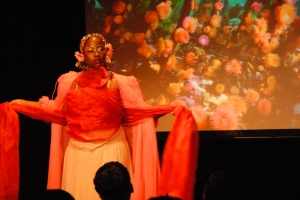
Gabrielle Civil from ANEMONE, photo by Chys LaramyInterview + New Work

Gabrielle Civil is a black woman poet, conceptual and performance artist, originally from Detroit, MI. Over the last decade, she has premiered over twenty five original performance art works in the United States (Minneapolis, Chicago, NY), The Gambia, Puerto Rico and Mexico. In fall 2012, she will launch her catalogue In and Out of Place: Making Black Feminist Performance in Mexico. She teaches literature, writing, Women’s Studies & Critical Studies of Race & Ethnicity at St. Catherine University in St. Paul, MN. The aim of her work is to open up space.

I asked Gabrielle to share her visions and latest workings because she is an artist that has consistently inspired audiences through her glittering performances that are both ethereal and body-centric. In this conversation she discusses some influences and how she is using the late Melvin Dixon’s novel Vanishing Rooms in an upcoming performance in St. Paul Minnesota. Gabrielle and I held our conversation via a Google doc over the course of a few days in late June, 2012.

–Sun Yung Shin for This Spectral Evidence

Upcoming event: Vanishing Rooms is running Sat. July 28 at 8 PM and Sunday July 29 at 4 PM at the Fish House Studio– in the Dow Building at 2242 University Avenue Suite B14. St. Paul, MN.

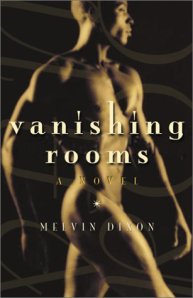
VANISHING ROOMS by Melvin Dixon*

TSE: How does the word “visionary” or “haunted” apply to your work–whether past, present, or future?

GC: These two words speak to twin poles of my work. “Visionary” is my aim, where I want my work to go, how I want my work to seem from the vantage point of the future. This is the quality that I most admire in other artists: Marina Abramovic, William PopeL., Jayne Cortez, Simone Leigh, Pina Bausch . . . So many people from the past and present working in different fields who inspire me. These artists have such compelling visions,indelible, strange and completely their own  . . . That is what I want to generate, crack open, allow for myself and my work. “Haunted” is how my work often relates to the past. It is haunted by specters of racism, by questions of body, by personal conversations and experiences, by images I’ve seen or books I’ve read. The word “haunted” is especially appropriate for what I’m working on in performance right now. Moe Lionel and I are collaborating on a new work inspired by Melvin Dixon’s Vanishing Rooms. I can say that I have been haunted by that book (which is literally a ghost since it’s now out of print.) The book has became a source, a catalyst to do something new with in it, in my body, in writing, in language and with someone else.

TSE: I love that. The title of Melvin Dixon’s novel, and from the little I read about it, reminded me of Other Voices, Other Rooms by Truman Capote and Baldwin’s Giovanni’s Room. Tell me more about how Dixon’s book has been haunting you and what it opened up for you; you are someone who is so well read, so well traveled, such a committed artist–how was this novel able to surprise you? What stones unturned within you / your aesthetic did it turn over? Tell me more about what Moe Lionel is bringing to the new work.

GC: Vanishing Rooms is really an astonishing book. I first read it in my early 20s when I was living in NYC as a graduate student. I have such vivid memories of pulling it down from the shelf at the Jefferson Market Library on 6th Avenue, the one that looks like a castle, and getting immediately sucked into this intense relationship between Ruella McPhee, a straight black woman dancer and Jesse Durand, a gay black dancer in 1975 New York. It’s a book that’s about impossible desire and art making and coming into one’s own and all of these things were so important to me and continue to be. The novel is told in alternating chapters from 3 points of view: Ruella (who Jesse calls Rooms), Jesse and then a third character Lonny, who is the classic “troubled” white youth, a gaybasher who is actually closeted gay himself. So he represents a kind of violent, white masculinity that resonated with the some of the themes and stories in Moe Lionel’s Naked Stages piece “in and out of the body.”

Maybe it was because Ellen Marie Hinchcliffe and I were directing this work that I had the urge to pick up Dixon’s novel again. But near the time when Moe’s piece was about to premiere, I reread the book and right before I left Minnesota for the winter, I gave Moe the book with a letter about what it had meant to me and how I felt it was connected to his work. This started a rich correspondence between us about this book and at one point, we just decided that we needed to bring our conversations more directly into art-making. So along with the novel itself, our correspondence represents the source of the new work.

TSE: Excellent. So I will wait for the performance itself before inundating you with more questions about that work. On another topic, how has landing in/spending time in Minnesota affected/influenced you as an artist and would audience members experience or see any of that in your work? Is any of it visible/audible? How do you negotiate what it means? Do you let it matter much? Does Minnesota haunt your work in any way? Has it changed for you since arriving–10 years ago? 

GC: Those are all such rich questions. There’s no doubt that coming to Minnesota made a tremendous difference in my development as an artist. From the start, I was engaged in various artistic communities–Cave Canem master classes and grant proposal panels for MRAC. I saw innovative work at the Walker that really stuck to me (“Memorandum” by Dumb Type and the Yes! Yoko Ono show.) And I really became a performance artist here, largely because of the grant opportunities (Red Eye’s Works-in-Progress, Naked Stages, grants from my job at St. Kate’s) and the amazing interdisciplinary artists here who were fusing dance, poetry, monologues, installation, everything. I’m thinking of the impact of early Naked Stagers like Flávia Müller Medeiros and Mama Mosaic or Marcus Young’s “Big Idea Store” at Intermedia when they had the Inside/ Out installation series. (Talk about spectral evidence, so much of this stuff is gone now and people may not ever have seen it. . .)

At the same time, it has been difficult for me to be Minnesota.

I like street culture, the erotic crackle of people walking, talking, rubbing up against other on the day to day. I like mixing and mingling with people from all around the world. There’s some diversity here, and I’m thankful for it, but it’s nothing like New York City or Mexico City where I’ve been spent significant time over the last 4 or 5 years. Plus I hate the cold! So that’s no joke.  In order for me to have stayed in Minnesota, I’ve had to leave a lot. And that has certainly impacted my work in a number of ways. I’ve made a lot of work in other places: “Anacaona” in Puerto Rico, “ghost/gesture” in the Gambia and tons of pieces in Mexico (BRUSH, Muño, Despedida and more. . .). This has meant that people here in Minnesota don’t always even have a chance to see my work and I don’t think I’ve done the greatest job building and nurturing an audience here.

Also the pieces that I have made recently in Minnesota like “Tie Air” in 2009 at CIA or “anemone” the piece I did last month at Pleasure Rebel are often informed by a kind of restlessness. The work is haunted by questions of who I am and who I can be here in Minnesota as an artist and as a woman and how those things don’t always feel like they fit.

In the 2011 Bedlam TenFest, Ellen Marie Hinchcliffe and I did a collaboration called “From the Hive.”  At one point in the piece I say:

Tasked with the body.

I’m not here.

A taste of sweetness.

A Floating Year.

Longing, longing

the whole winter long

reading Dany Laferrière.

A couple in an airport.

An endless kiss.

Riotous

in Port-au-Prince

in Minneapolis.

“I wanna be your lover”

I don’t want to be here

but I am.

Exiled from desire.

The red kiss.

I think that says it all!

TSE: And lastly, what do you need to take your work and life to the next stage, level, etc.?

GC: In terms of what I need to take my work and life to the next level, I’m like everyone everyone else. I need time, money, space, breath, invitations and opportunities, sweat and good luck. I think I do need to figure out my relationship to place–where I feel most inspired and supported. I’m not sure it’s here. But I am also very thankful for the various communities that have fostered me here. And certainly for my friends and fellow artistic troublemakers. I leave a lot but I also get welcomed back with open arms.

§

From  * a n e m o n e- gabrielle civil

Performed May 30, 2012

in Pleasure Rebel (curated by Nastalie Bogira)

at the Bryant Lake Bowl, Minneapolis, MN.


PP SLIDE 4 BLACK SLIDE

(part 3 disambiguation)

She pulls the flowers from her head

(he loves me he loves me not) to make

a secret garden. the flowers on a grave.

She sings: you need a man with / sensitivity / a man like

She says:

Search and search all you want,

there are no pictures of Assotto Saint

and his lover Jan Holmgren together on the internet.

To find this vision, you have to reach inside.

The two of them in the 1980s wearing assless chaps,

singing electroclash in their band Xotica.

His books are out-of-print but on page 197

you can find the chorus of one their songs. . .

“touch is what i want

touch is what I need

touch me, be with me

everywhere”

She rubs the faces of the two flowers down her cheeks.

She pulls them down her neck to her heart.

HE ASKED: ARE THERE ANY COUPLES THAT YOU ADMIRE?

touch is what i want

WELL, THERE’S MY LANDLORDS DAVE & TY. . .

touch is what I need

AND MY FRIENDS SHARON & THERESE. . .

touch me, be with me

BUT A COUPLE  everywhere

IN MINNESOTA COUPLES COUPLES  EVERYWHERE

BUT A COUPLE WITH SOMEONE IN IT LIKE ME WELL

She crosses over to the chair.

Pulls down her electric hair.

Takes off her drag queen red platform shoes.

Pleasure Rebel How?

(part 4 epitaph cocoon)


And again more a stand in / trying to explain

something both stemmed and flailing.

again the straight girl turning to the gay people

for advice

for love

In Risin to the Love We Need, Assotto Saint wrote:

“to be dehumanized into a dick is far more damaging

than to be discriminated.” Yes.

And to be dehumanized by a dick?

To be humanized by one?

HE ASKED ME:

“WHEN DID YOU DECIDE YOU WOULD NEVER LOVE ANYONE?

WHEN DID YOU DECIDE NO ONE WOULD EVER LOVE YOU?

Are you overhearing me?

She gathers the red and cocoons herself.

She holds up the book and the flashlight.

as a girl at night when I was supposed to be asleep

I would get real cozy in my body and

make myself a cocoon under covers

and this is what I’d do:


She pulls out the book and reads with the flashlight.

not what you expected? / exactly.

By Assotto Saint from Spells of a Voodoo Doll.

Epitaph

There’s a grave in your heart

father holed

where over & over you lay

to bury yourself

through thirty years [thirty seven years actually]

of fits furies & fangs

ground zero

* * *

here lives she

whose womb is a wound


She sets down the book, puts the flowers down gingerly over it.

She turns off the flashlight.


here lives he

whose words are submarine.

Assotto Saint.

Saint Haitian American

black gay AIDS activist out of print lover .

I love him and we are not the same.

§

from Vanishing Rooms

 December 19, 2011

 Dear Mondy —

Merry Christmas!

 I want to give you this book with a bit of an explanation because it is so loaded. Just look at the cover! Riding on the subway in New York City with it open in my hands, I could see my fellow passengers arch their eyebrows. Really Sis? What’s on your mind?

 The first time I read the book years ago, the cover was different. A triptych drawing of three characters in 1970s style. I was a young grad student at NYU and I lived in the heart of the West Village (the corner of Bleecker and Christopher Streets in a 6 floor walk up) and I was probably 21 or 22 years old and wanted so many things all at once. I wanted to be an artist. I wanted to write amazing poems. I wanted to be in love. I wanted to love. I wanted not to get my heart broken. I wanted not to need anyone. I wanted to be friends with everyone in the whole world. I wanted to be the life of the party. I wanted to be able to be alone (a strange goal as in key ways I’d always been alone – so I guess I wanted to be able to accept that I would be alone and learn how to make the best of it and flourish.)  […]

 One day at the Jefferson Market Library, I pulled down this book Vanishing Rooms and immediately tore into it. There was a black woman dancer and she was in NY with dreams and somehow that was what I latched onto from the start. And oh! The love that dare not speaks its name. In my early adulthood, sexuality belonged to gay men. They were the only ones allowed to have it and explore it. And there she was having a dalliance (a relationship) with this gay man and somehow he loved her (although not how she wanted him to) and what the hell could anybody do with a relationship like that?

 It was a book that affected me deeply even as I realize now that I didn’t understand a lot of it then (and still may not) and also that what is important to me about the book shifts depending on what’s going on for me in my life…  [….]

 Anyway, this book is not light. It’s intense and about gender and race and sexuality and love and friendship and all the things we talked about over beer and fish and chips for me and beer and baby back ribs for you.

 If you have a chance to read it, let me know what you think (about how men dance – and the difference between men and boys.) […]

 Love + Kisses

Gabrielle

§